Why Compression Waistband Placement Matters So Much More After a C-Section
Quick Answer: After a C-section, the incision sits low on the abdomen, and a waistband that rides directly over it — even under light pressure — can cause real irritation or discomfort during healing, so most postpartum-specific compression garments are designed with a waistband that sits either notably below or notably above the incision line rather than directly across it, and getting that placement right matters more than the garment’s overall compression level.
Compression itself isn’t usually the problem after a C-section — where exactly the waistband lands relative to the incision is what makes the same garment feel fine on one person and miserable on another.

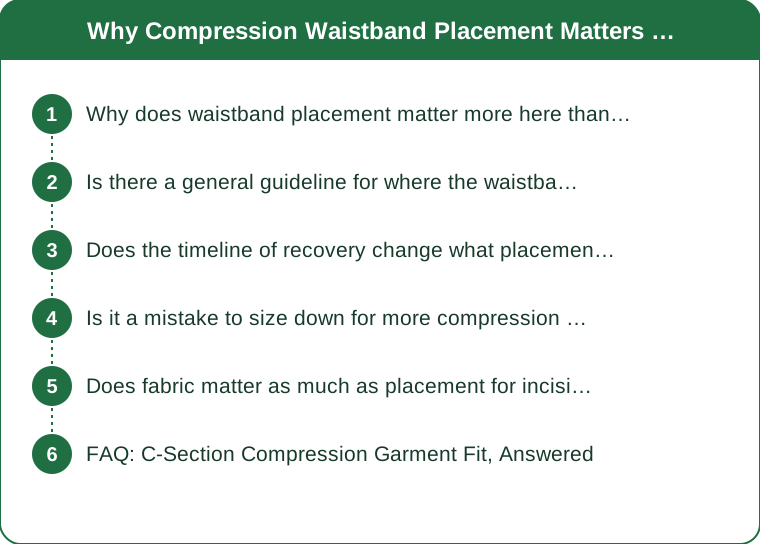
Why does waistband placement matter more here than with general compression wear?
A C-section incision is a healing surgical site, typically located low on the abdomen, and any direct pressure or friction across it during the early recovery weeks can genuinely slow healing or cause discomfort — this is a meaningfully different situation than general postpartum compression for someone who delivered vaginally, where there’s no incision line dictating exact placement.
Is there a general guideline for where the waistband should sit relative to the incision?
Many postpartum-specific compression garments are designed with the waistband sitting either just above the belly button (well clear of a low transverse incision) or low enough to sit below the incision entirely, avoiding the middle zone where the scar itself typically sits — checking this against your own incision location, rather than assuming a standard garment fits correctly, is the key step.
Does the timeline of recovery change what placement is appropriate?
Yes — in the earliest weeks post-surgery, even a well-placed waistband may still need to be worn looser or for shorter periods as the incision is most sensitive, while placement precision matters somewhat less by 6-8 weeks as healing progresses — most guidance still recommends checking with a doctor before starting any compression wear post-C-section, particularly in the first couple of weeks.

Is it a mistake to size down for more compression on top of an incision?
Generally, yes — sizing down to increase overall compression can inadvertently increase pressure directly over a still-healing incision, which is the opposite of what’s needed — a properly sized garment with correct waistband placement is generally a better approach than a smaller size chosen purely for more overall tightness.
Does fabric matter as much as placement for incision comfort?
It matters, but placement is usually the bigger factor — a soft, breathable fabric reduces friction and irritation risk, but even the softest fabric sitting directly over a healing incision under compression can still cause discomfort, so fabric choice is a secondary consideration layered on top of getting placement right first.
FAQ: C-Section Compression Garment Fit, Answered
How soon after a C-section is it safe to start wearing compression garments?
This varies by individual healing and should be confirmed with your doctor, though many are cleared for light compression wear within the first couple of weeks if the incision is healing well.
Should the waistband be checked differently while sitting versus standing?
Yes — checking fit in both positions is worthwhile, since a waistband that clears the incision while standing can sometimes shift closer to it while sitting.
Is it normal for compression garment needs to change several times in the first two months?
Yes — as swelling decreases and the incision heals, many people find they need different sizing or placement adjustments across the early postpartum weeks rather than one garment working the whole time.
This is general information, not medical advice — talk to your doctor about the appropriate timeline and type of compression wear for your specific C-section recovery.
TL;DR:
- A waistband sitting directly over a C-section incision can cause real discomfort, even under light compression
- Garments designed to sit clearly above or below the incision line, not across it, tend to fit better
- Sizing down for more compression can inadvertently add pressure to a still-healing incision
- Fit needs often change across the early postpartum weeks as healing and swelling both shift
The right compression garment isn’t just about the compression level — it’s about where the waistband actually lands on your specific incision, and that’s worth checking by hand, not just by size chart.
See It in Motion
Seen here: Maternity Capris with Side Pockets — shop it on bubblelime.com
Keep Reading
This article is for general informational and styling purposes only. Fit, sizing, and product availability may vary.
