Postpartum Night Sweats: What Your Recovery Wear Should Actually Do
Quick Answer: Postpartum night sweats are driven by the sharp drop in estrogen after delivery plus the body shedding the extra fluid volume of pregnancy, and they typically peak in the first two weeks and fade over about six. The clothing that helps moves moisture away from skin and dries fast: merino or a moisture-wicking synthetic blend, loose through the torso, with separates rather than a one-piece so you can change one layer at 3am.
You wake up soaked, change everything, and are awake for forty minutes. Three nights of that and the fatigue is not really about the baby. The fabric is a bigger variable here than anyone tells you.

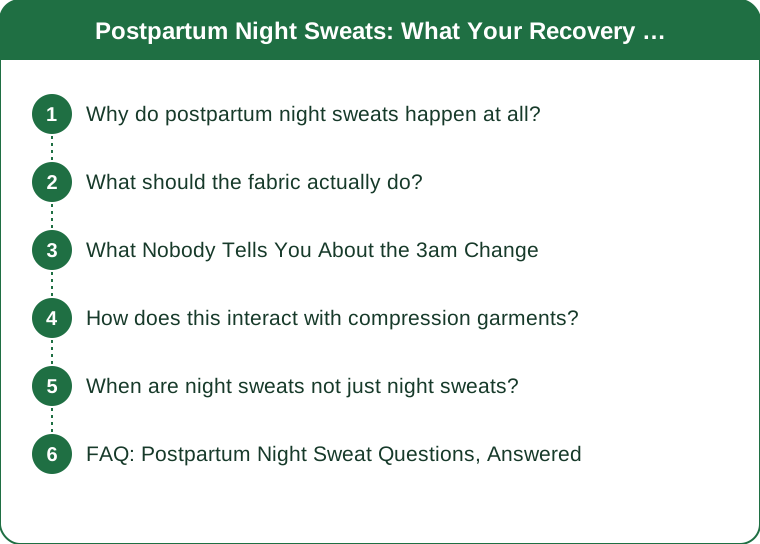
Why do postpartum night sweats happen at all?
Two processes overlap, and both peak in the same window.
Estrogen levels fall sharply after delivery, dropping from pregnancy highs to very low levels within days. The hypothalamus, which regulates body temperature, responds to that change in much the same way it does during menopause, producing hot flashes and night sweats.
Simultaneously, your body is offloading the substantial extra fluid volume accumulated during pregnancy. Some leaves through urine, and a significant portion leaves through sweat. This is a productive process rather than a malfunction.
The combination typically peaks in the first one to two weeks and eases over roughly six, though breastfeeding can extend it because prolactin suppresses estrogen further.
Knowing it is finite matters more than it sounds. People manage a temporary six-week problem very differently from one they believe is permanent, and the practical setup below is worth building precisely because it has a defined end date.
What should the fabric actually do?
Three jobs, in this order: move moisture off the skin, dry quickly, and not hold odor.
Cotton fails the first two. It absorbs moisture and holds it against the skin, which is why a cotton sleep shirt goes from damp to cold and stays that way. Cold wet fabric against skin is what wakes you, more than the sweating itself.
Merino wool is the strongest option for this specific use. It moves moisture as vapor, retains warmth when damp, and resists odor well enough that you can wear a garment more than once, which matters enormously when laundry capacity is limited.
Technical synthetic blends are the affordable alternative. Look for wicking or moisture-management descriptions rather than just polyester. They dry fastest of anything but hold odor more, so plan on washing after each use.
Bamboo viscose sits in between: soft, reasonably breathable, but slower to dry than either of the above. Popular in postpartum wear and better than cotton, not as good as merino.
For plus-size fit specifically, the important detail is airflow. A fabric that performs well while clinging to skin performs much worse than the same fabric with a little space, so a relaxed cut through the torso matters as much as the material.
What Nobody Tells You About the 3am Change
Separates beat a nightgown or a one-piece. At 3am, changing one damp layer takes twenty seconds. Changing a full garment while sore, possibly one-handed, and trying not to fully wake up takes several minutes and wakes you completely.
Keep the replacement set within arm’s reach of the bed, already unfolded. Not in a drawer. The friction of walking to a dresser is the difference between a quick change and lying there wet because it is not worth getting up.
Put a towel over the bottom sheet. Swapping a towel is a fraction of the work of changing sheets, and it protects the mattress during the peak weeks.
Nursing access and sweat management conflict. Many nursing sleep bras are cotton-heavy and sit exactly where sweat collects. A separate wicking layer plus a simple nursing bra often works better than one garment trying to do both.
And the one that catches people managing a c-section recovery: the waistband is the worst sweat trap in the outfit. A high waistband over an incision site holds moisture against healing skin, which is uncomfortable and not ideal for the incision. A high-rise wicking short or a waistband that sits well above or below the incision line, in a fabric that dries, is worth prioritizing over softness.

How does this interact with compression garments?
Directly, and it is worth planning for rather than discovering.
Compression garments are usually made from dense elastic fabrics that do not breathe well, and worn overnight during the peak sweat weeks they can trap a substantial amount of moisture against skin. That creates conditions for skin irritation and, in skin folds, for fungal irritation.
The practical approach most people land on: use compression during the day when you are upright and it does the most good, and skip it overnight during the weeks when sweating is heaviest. Compression’s main benefits relate to support and comfort while active, so overnight use is less valuable than daytime use for most people.
If you do wear it overnight, a thin wicking layer underneath makes a real difference, and skin checks in the morning matter. Redness, itching, or a rash in a skin fold needs air and drying rather than more layers, and persistent irritation should be looked at.
Drying skin folds thoroughly after showering and before dressing is a small habit with an outsized effect during these weeks.
This is general information, not medical advice.
When are night sweats not just night sweats?
Most postpartum sweating is normal and self-limiting. A few patterns are not, and they matter.
Contact your provider promptly for: a fever of 100.4F or higher, sweats accompanied by chills and shivering, foul-smelling discharge, redness or increasing pain at an incision or tear, or breast pain with a red area and flu-like symptoms. These can indicate infection, including mastitis or endometritis, and postpartum infections need prompt treatment.
Also worth raising: sweats that are getting worse after week six rather than better, sweats with a racing heart or unexplained weight loss, which can point to postpartum thyroiditis, a genuinely common and treatable condition that is frequently mistaken for normal recovery fatigue.
And if sweating is accompanied by significant anxiety, panic, or sleep that will not come even when the baby is asleep, that is worth mentioning too. Postpartum anxiety and depression are common, treatable, and often surface in exactly this window.
The fabric fixes the laundry. It does not replace a phone call when something feels off, and providers expect and want these calls.
FAQ: Postpartum Night Sweat Questions, Answered
How many sets do I actually need?
Three to four sets of separates gets most people through the peak weeks without doing laundry daily. Merino stretches that further because it can be aired and reworn.
Does drinking less water help?
No, and it works against you. The fluid loss is happening regardless, and reducing intake risks dehydration, particularly while breastfeeding. Keep water by the bed and drink after each change.
Will the room temperature make much difference?
Yes. Somewhere in the mid-60s Fahrenheit is a common recommendation for sleep and it helps here specifically, because a cooler room shortens the time damp skin stays uncomfortable. A fan on low moving air across the room helps more than lowering the thermostat further.
TL;DR:
- Estrogen drop plus shedding pregnancy fluid drives sweats that peak in weeks one to two and fade by about six
- Cotton holds moisture against skin; merino and wicking synthetics move it away and dry fast
- Use separates, keep a spare set within arm’s reach, and put a towel over the sheet
- Skip overnight compression during peak weeks, and call your provider for fever, chills, or worsening after week six
Buy three sets of wicking separates and put one on the nightstand. That is a twenty-minute decision that buys back several hours of sleep across the next month.
See It in Motion
Seen here: Maternity Capris with Side Pockets — shop it on bubblelime.com
Keep Reading
This article is for general informational and styling purposes only. Fit, sizing, and product availability may vary.
