Why Your Postpartum Bra Size Changes Week to Week - and How to Buy for a Moving Target
Quick Answer: Postpartum breast size changes on two timescales at once - a large shift over the first six to eight weeks as milk supply regulates, and a daily swing of a full cup size or more between feeds. Buying a fixed size for a moving target is the whole problem. The approach that works: soft, stretchy, wire-free bras with wide adjustable bands in the first six weeks, then fit properly around week eight to twelve once supply has settled. Buy few, buy stretchy, and buy again later.
The rib cage is also still changing, which is why the band feels different from week to week.
This is general information, not medical advice.

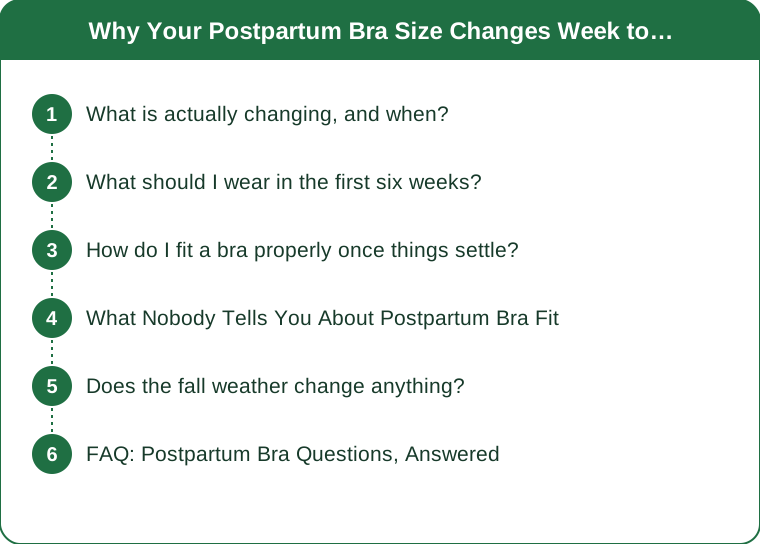
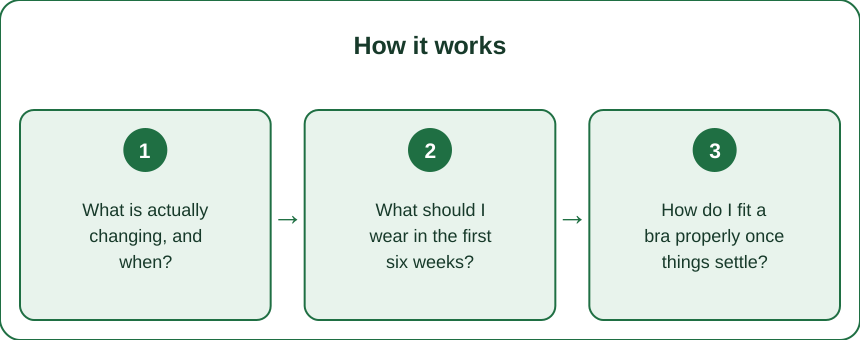
What is actually changing, and when?
Two overlapping timelines, which is why it feels so unpredictable.
Days 2-5: milk comes in. Breast size increases substantially and often dramatically, along with swelling that is partly fluid rather than milk. This is the largest and briefest change and it is not a size to buy for.
Weeks 1-6: supply regulates. The body moves from producing based on hormones to producing based on demand. Size typically decreases from the early peak and fluctuates considerably week to week.
Weeks 6-12: relative stability. Supply is generally established, and this is the sensible window to buy properly fitted bras.
Overlaid on all of it: the daily cycle. Fullest before a feed, smallest after - a difference that commonly spans a full cup size or more within a couple of hours.
And the band is moving too. The ribcage expands during pregnancy and gradually returns over months, and fluid retention adds a further variable in the early weeks. So both measurements are changing on different schedules, which is exactly why a bra can feel right in one dimension and wrong in the other.
What should I wear in the first six weeks?
Forgiving rather than fitted. This is a comfort period, not a fit period.
Soft, wire-free, stretchy. A knit fabric with good recovery accommodates the daily swing without pressure points. Wireless is the standard recommendation early on - a wire sitting in the wrong place on a changing breast can contribute to blocked ducts.
Wide bands, adjustable closures. A wide band distributes pressure and stays put; multiple hook positions let you follow the ribcage as it changes. A pull-on style with no adjustment is the least adaptable option.
Buy two or three, not a drawer full. Anything bought now will not fit in two months, so a small number of comfortable pieces is the efficient choice.
Size up on the band rather than down. Tight bands are uncomfortable and can contribute to blocked ducts. If in doubt, looser.
Sleep bras are worth having. A light, soft bra for overnight supports comfort and holds nursing pads in place through night feeds.
Watch for any warning signs. Pain, a hard tender lump, redness, or fever needs medical attention rather than a fit adjustment - mastitis is common and treatable, and it is not a bra problem. This is general information, not medical advice.
How do I fit a bra properly once things settle?
Measure at the right moment and let the band do the work.
Measure after a feed, not before. The post-feed size is the smaller end of your range, and a bra fitted at the fullest point will be loose most of the time. Fabric stretch accommodates upward far better than downward.
Get the band right first. It should sit level, snug, and be doing most of the support work. Fasten on the loosest hook when new so there is room to tighten as elastic relaxes.
Then the cup, with room to expand. A stretchy fabric or a slightly relaxed fit handles the fill cycle. A rigid cup fitted exactly will be uncomfortable within two hours.
Check with the clip open. Nursing bras have to fit and function in two configurations. Open the clip and check that the cup still supports and that the opening is workable one-handed - because that is how it will be used.
Expect to fit again. Size shifts when solids are introduced, when feeds drop, and again after weaning. Two or three fittings across the first year is normal, not a sign of doing something wrong.
And return to underwire only when it is comfortable, generally after supply is well established. A properly fitted wire that sits on the ribcage, not on breast tissue, is fine for many people at that stage.

What Nobody Tells You About Postpartum Bra Fit
Five things that would save a lot of frustration.
The band size may be different from your pre-pregnancy one for a long time, and sometimes permanently. Ribcage changes do not always fully reverse, and there is nothing wrong with that number changing.
Bra size after weaning is a third stage. Many people find their post-weaning size differs from both their pregnancy and pre-pregnancy sizes, which is why buying an expensive full set while still nursing tends to disappoint.
The daily swing means one bra rarely covers everything. A stretchier bra for full periods and a firmer one for later in the day is a practical, underrated approach - and cheaper than repeatedly replacing one style.
Compression is not support. A tight, flattening garment restricts without supporting, and pressure on the breast during lactation is worth avoiding. Look for a lifted shape rather than a flattened one.
And comfort is the metric that matters right now. A bra you can wear for fourteen hours while carrying a baby beats a technically perfect fit you keep adjusting. This is a season for practicality, and the properly fitted version is coming later. This is general information, not medical advice.
Does the fall weather change anything?
It changes what goes over the bra, and that turns out to matter.
Layers become the access problem. A summer nursing top is easy; a sweater plus a jacket makes one-handed access genuinely difficult. The two-layer method - a stretchy cami that pulls down under a looser top that lifts up - works well and requires no special clothing.
Night sweats meet cooler rooms. Postpartum night sweats are common as fluid levels normalize, and a cool bedroom with a moisture-wicking sleep bra handles it far better than heavy cotton, which holds damp against the skin all night.
Heating dries the air. Dry indoor air and frequent feeding can make skin sensitive. Soft, seamless fabrics and breathable materials matter more once the heating comes on.
Cooler weather usually means more walking, which is a good thing - and it makes band fit more noticeable. A band that felt fine sitting down can ride up on a 30-minute walk. This is worth checking before you buy several of the same style.
And the seasonal wardrobe swap is a natural checkpoint. If you are around week eight to twelve as the weather turns, that is a reasonable moment for a proper fitting - the timing lines up with when supply has typically settled.
FAQ: Postpartum Bra Questions, Answered
When should I buy properly fitted nursing bras?
Around week eight to twelve, once supply has regulated. Before that, buy two or three soft stretchy ones and accept they are temporary.
Is underwire really a problem?
Early on, wires that sit on breast tissue can contribute to blocked ducts. Once supply is established and if the wire sits correctly on the ribcage, many people wear underwire comfortably. Discomfort is the signal to stop.
Why does the same bra feel tight in the evening?
Fluid retention, ribcage changes, and time since the last feed all contribute. This is why multiple hook positions matter - the adjustment is not a sign of a wrong size. This is general information, not medical advice.
TL;DR:
- Two timelines overlap: a large shift over six to eight weeks plus a daily swing of a full cup size or more.
- First six weeks: soft, wire-free, stretchy, wide adjustable bands. Buy two or three, not a drawer full.
- Fit properly around week eight to twelve, measuring after a feed rather than before.
- Get the band right first and leave room in the cup for the fill cycle.
- Expect to refit after solids start and again after weaning - it is normal, not a mistake.
Buy fewer than you think and later than you think. The size you are buying for today is not the one you will have in six weeks. This is general information, not medical advice.
See It in Motion
Seen here: Maternity Capris with Side Pockets — shop it on bubblelime.com
Keep Reading
This article is for general informational and styling purposes only. Fit, sizing, and product availability may vary.
