Why Postpartum Compression Can Feel Fine in the Morning and Uncomfortably Tight by Evening
Quick Answer: Postpartum swelling (edema) naturally increases throughout the day due to gravity pulling fluid downward and outward during hours of being upright and active, meaning a compression garment fitted comfortably in the morning, when swelling is at its lowest after a night lying down, can feel noticeably tighter by evening as normal daily fluid shift adds to that baseline — a common, expected pattern rather than a sign the garment size is wrong.
Morning fit and evening fit on the same garment can genuinely differ, and normal postpartum fluid shift over the course of a day is usually why.
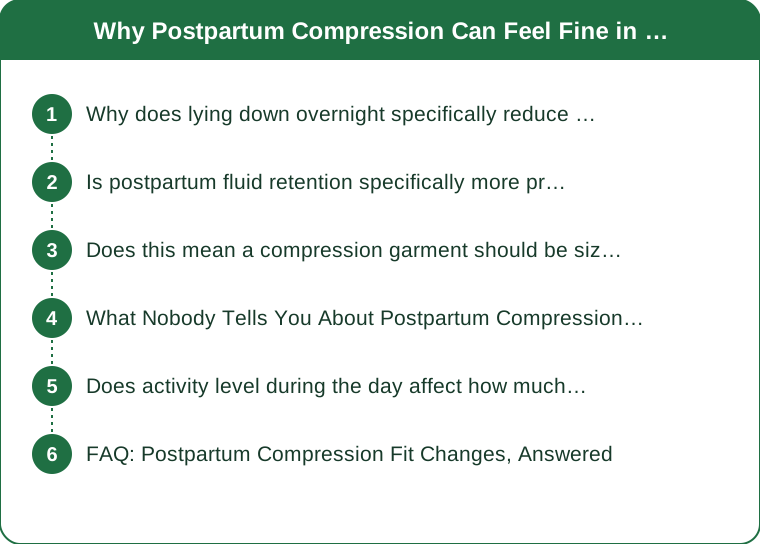
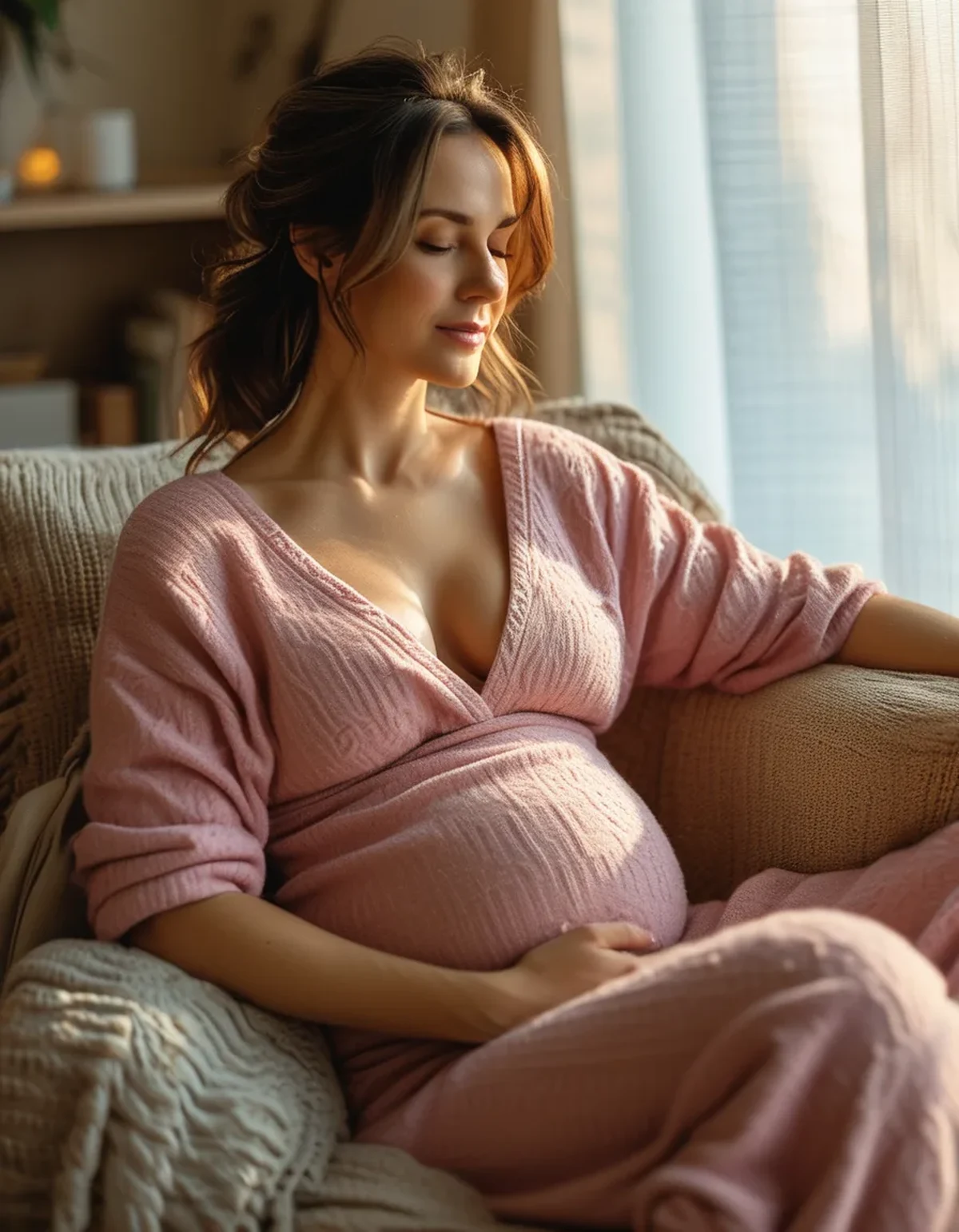
Why does lying down overnight specifically reduce swelling compared to being upright during the day?
Gravity pulls fluid downward and outward into extremities and the lower torso during hours spent upright, while lying flat overnight allows that fluid to redistribute more evenly and for the body’s lymphatic and circulatory systems to process some of the accumulated fluid, meaning morning swelling is typically at its lowest point of the whole day before the cycle begins building again.
Is postpartum fluid retention specifically more pronounced than typical daily swelling most people experience?
Yes — postpartum bodies are often still processing significant extra fluid volume accumulated during pregnancy, and this recovery process can take several weeks, meaning the normal daily morning-to-evening swelling cycle most people experience to a small degree is often considerably more pronounced during the postpartum period specifically.
Does this mean a compression garment should be sized for evening fit rather than morning fit?
Many postpartum recovery specialists recommend sizing based on how the garment feels through a full day of wear rather than morning fit alone, since a garment that fits well only in the lowest-swelling morning state may become genuinely uncomfortable, not just snugger, by evening on a regular basis.
What Nobody Tells You About Postpartum Compression Timing
Some postpartum garments are specifically designed with slightly more adjustable closures (velcro or multiple hook rows) rather than a fixed, non-adjustable fit precisely because this documented morning-to-evening size fluctuation is common enough that garment designers build in that flexibility rather than expecting one fixed size to work through the whole day.
Does activity level during the day affect how much this swelling shift occurs?
Yes — more time spent upright, standing, or walking during the day generally correlates with more pronounced evening swelling compared to a day with more elevated rest breaks, meaning the degree of this fit shift can vary meaningfully day to day based on activity level, not just time of day alone.
FAQ: Postpartum Compression Fit Changes, Answered
Is it normal for this morning-to-evening tightness pattern to continue for several weeks postpartum?
Yes, commonly reported through the first several weeks postpartum as the body continues processing pregnancy-related fluid retention, generally easing gradually over time.
Should a garment be removed if it feels uncomfortably tight by evening?
A garment causing genuine pain, numbness, or marked discomfort should be removed or adjusted; general snugness that’s noticeably worse than morning fit but not painful is a commonly reported normal pattern, though any concerning symptoms are worth discussing with a healthcare provider.
Does elevating the legs periodically during the day help reduce this evening swelling increase?
Yes — brief periods of leg elevation during the day can help reduce fluid pooling and may lessen how pronounced the evening tightness becomes, alongside adequate hydration, which supports the body’s fluid balance overall.
This is general information, not medical advice — postpartum swelling or discomfort that seems unusual or severe should be discussed with a healthcare provider.
TL;DR:
- Normal daily fluid shift from gravity makes swelling lowest in the morning and higher by evening
- Postpartum bodies process extra pregnancy-related fluid, often making this daily swelling cycle more pronounced
- Sizing a compression garment based on full-day wear, not just morning fit, avoids evening discomfort
- Adjustable-closure garments and periodic leg elevation both help accommodate this normal, expected pattern
If compression feels fine in the morning and tight by evening, that’s a documented normal pattern, not a sign the size is wrong — an adjustable garment or evening elevation breaks can help more than sizing up.
See It in Motion
Seen here: Maternity Capris with Side Pockets — shop it on bubblelime.com
Keep Reading
This article is for general informational and styling purposes only. Fit, sizing, and product availability may vary.
