Why Postpartum Compression Needs Actually Change Week to Week, Not Just Based on Symptoms
Quick Answer: Postpartum swelling, uterine involution, and core muscle recovery all progress on different, overlapping timelines, so a compression garment that provides the right support in the first two weeks often becomes too tight or unnecessary by weeks six to eight as swelling resolves and healing progresses — checking in with your own body every couple weeks, rather than wearing the same garment or tightness the entire recovery period, matches support to what’s actually happening.
If a compression garment that felt great early on starts feeling wrong later, that’s usually your body changing, not the garment failing.

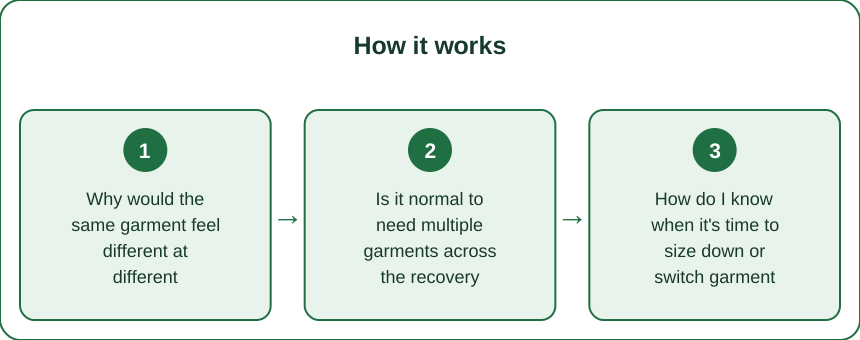
Why would the same garment feel different at different postpartum weeks?
Early postpartum swelling (from fluid shifts and delivery) is often significant and temporary, so compression that manages that swelling in week one or two provides genuinely different support than what’s needed once swelling resolves and the focus shifts to core and pelvic floor recovery around weeks four to eight.
Is it normal to need multiple garments across the recovery period rather than just one?
Yes — many people find a firmer, swelling-focused wrap works best in the first two weeks, transitioning to a lighter, more core-supportive garment as healing progresses, rather than expecting one single product to serve the entire recovery timeline equally well.

How do I know when it’s time to size down or switch garment types?
If a garment starts feeling restrictive rather than supportive, or leaves marks that weren’t there before, that’s usually a sign swelling has reduced and it’s time to reassess fit — checking in every one to two weeks rather than waiting for obvious discomfort catches this transition earlier.
Does this timeline apply the same way after a C-section versus vaginal delivery?
The general principle applies to both, but C-section recovery often benefits from a longer period of gentle abdominal support specifically around the incision site, so the transition to lighter compression may happen somewhat later than after vaginal delivery.
FAQ: Postpartum Compression Timing, Answered
Is there a maximum amount of time compression should be worn overall?
Most guidance suggests compression wear tapers off naturally by around eight to twelve weeks as swelling and initial healing resolve, though this varies by individual recovery and delivery type.
Should I consult a doctor before switching garment types?
Check with your doctor especially after a C-section or if you have any complications, since incision healing status affects what type of support is appropriate at each stage.
Can wearing compression too tight for too long cause problems?
Yes, overly tight compression worn past the point it’s needed can restrict circulation or feel uncomfortable without adding recovery benefit, which is part of why reassessing fit periodically matters.
TL;DR:
- Swelling, uterine recovery, and core healing progress on different overlapping timelines
- A garment that fits well at week two often needs to change by weeks six to eight
- Many people benefit from a firmer early wrap transitioning to lighter core support later
- Reassessing fit every one to two weeks catches the right time to transition
See It in Motion
Seen here: Maternity Capris with Side Pockets — shop it on bubblelime.com
Keep Reading
This article is for general informational and styling purposes only. Fit, sizing, and product availability may vary.
