Why Postpartum Night Sweats Change What You Should Sleep In
Quick Answer: Postpartum night sweats come from your body clearing the extra fluid volume of pregnancy alongside a sharp estrogen drop. They typically peak in the first two weeks and ease by six. The right sleepwear is moisture-wicking and layered so you can change one piece in the dark rather than fully waking to change everything.
Nobody warned you about this one. You wake at 3 AM with the sheets damp and your shirt soaked through, and for a moment you think something is wrong. Nothing is. It is one of the most common and least-discussed parts of the early postpartum weeks, and it is very manageable once you set up for it.

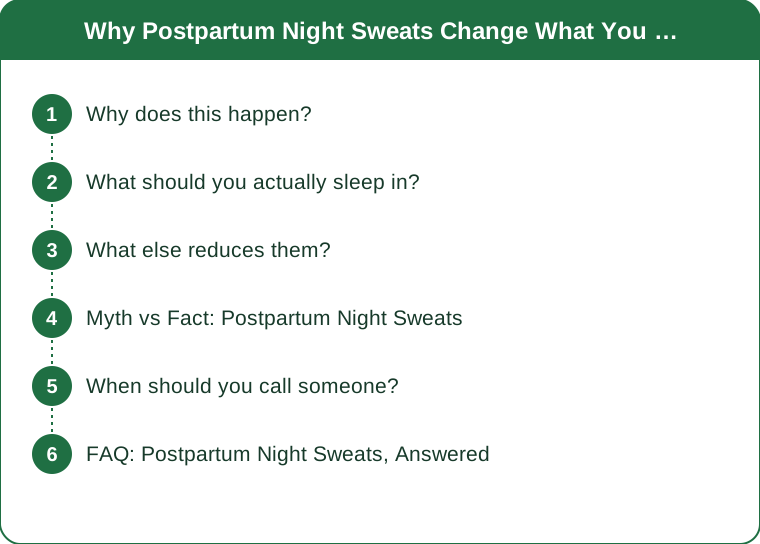
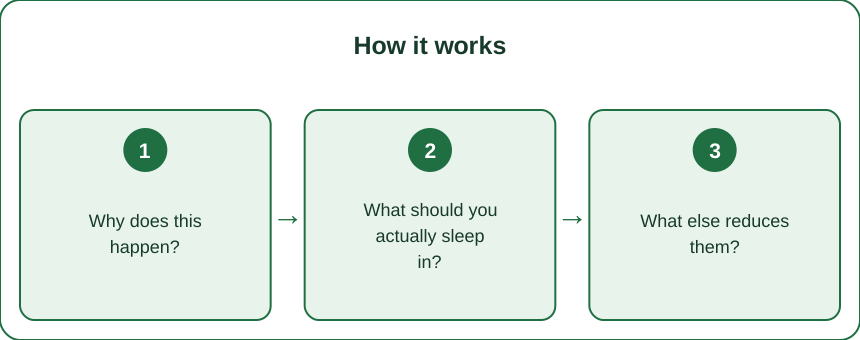
Why does this happen?
Two mechanisms at once.
Fluid volume. During pregnancy your blood volume increases substantially, along with a lot of extra interstitial fluid. After delivery, all of it has to go, and your body has exactly two routes: urination and sweating. Both run hard for the first one to two weeks. This is the same reason you may be urinating far more than usual.
Hormones. Estrogen and progesterone drop precipitously after birth. That drop affects the hypothalamus in much the same way perimenopause does, narrowing the range in which you feel comfortable and triggering vasomotor responses — flushing and sweating.
If you are breastfeeding, estrogen stays lower for longer, which is why night sweats often persist further into the postpartum period for nursing parents.
Timeline: heaviest in the first two weeks, usually much improved by six, and occasionally lingering for several months while breastfeeding. All of that is within the normal range.
What should you actually sleep in?
The principle is layers you can change one at a time in the dark, in wicking fabrics.
A setup that works:
- A moisture-wicking base layer — a nursing tank or short-sleeve tee in a technical fabric or merino, not cotton
- A separate light bottom rather than a one-piece nightgown, so you can change just what is wet
- A towel or a waterproof-backed pad over the fitted sheet, which means a soaked night does not require stripping the bed at 3 AM
- A second full set within arm’s reach of the bed, so changing takes 40 seconds without turning on a light
Why not cotton: it absorbs and holds moisture against your skin, so you stay wet and then get cold as it evaporates. That cold phase is what fully wakes you. Wicking fabrics move moisture away, and merino in particular stays comfortable even when damp.
Skip the full nightgown for these weeks. Changing a gown means sitting up and going over your head, which wakes you completely.
What else reduces them?
Environmental and behavioral things, most of which cost nothing.
- Keep the room cool — the low to mid 60s is the usual recommendation, and it matters more now than it will later
- Stay well hydrated. It is counterintuitive when you are losing fluid through sweat, but dehydration worsens temperature regulation and matters even more if you are breastfeeding
- A fan on low, which helps evaporation and provides white noise
- Limit caffeine after midday, since it adds a sympathetic load on a system already dysregulated
- Layer the bedding rather than using a single duvet, so you can shed one layer without a full renegotiation
One practical note: pads and towels over the sheet mean you can strip a wet layer in ten seconds instead of remaking a bed. In a period where sleep comes in 90-minute installments, that difference is significant.

Myth vs Fact: Postpartum Night Sweats
Myth: Sweating this much means an infection. Fact: Night sweats alone in the early postpartum weeks are expected. Sweating with a fever above 100.4°F, chills, foul-smelling discharge, or breast pain and redness is different and needs same-day medical attention.
Myth: It means you are losing the baby weight. Fact: The fluid loss is real, and the scale may drop noticeably in the first two weeks because of it. That is water, not fat, and it says nothing about anything else.
Myth: Drinking less will reduce the sweating. Fact: The opposite. Dehydration impairs thermoregulation and reduces milk supply if you are nursing.
Myth: It should be over by two weeks. Fact: Two weeks is typically the peak, not the end. Six weeks is a more realistic resolution point, and longer while breastfeeding is common.
When should you call someone?
Most night sweats need nothing but a change of shirt. Some things warrant a call.
Contact a clinician if you have:
- A fever above 100.4°F, or chills alongside the sweating
- Sweating that continues heavily beyond about six to eight weeks with no improvement
- Heart palpitations, unusual anxiety, unexplained weight loss, or heat intolerance — postpartum thyroiditis is common and easily missed, typically appearing between one and six months after delivery
- Sweating alongside heavy bleeding, dizziness, or shortness of breath
Also worth mentioning: if the night waking is compounding a low mood, intrusive thoughts, or anxiety that is not easing, say so at your appointment. Postpartum mood conditions are common and very treatable, and sleep disruption both worsens them and masks them.
This is general information, not medical advice — your postpartum provider is the right person for anything specific.
FAQ: Postpartum Night Sweats, Answered
Do they happen after a C-section too?
Yes. The fluid shift and hormone drop happen regardless of delivery method, so night sweats are equally common after a cesarean.
Will they come back with a second baby?
Usually yes, and often with a similar pattern to the first time. The advantage is that you know what to set up in advance.
Does weaning bring them back?
Sometimes. Weaning involves another hormonal shift, and some people notice a brief return of night sweats or hot flashes for a few weeks around that transition.
TL;DR:
- Night sweats are fluid clearance plus a sharp estrogen drop, peaking in the first two weeks
- Sleep in wicking layers you can change one piece at a time, and skip cotton and nightgowns
- Put a towel or waterproof pad over the fitted sheet and keep a spare set within reach
- Fever, chills, or symptoms past six to eight weeks are worth a call
This is one of those postpartum things that is completely normal and almost never mentioned in advance, which is why it feels alarming at 3 AM. Set up the layers and the spare shirt tonight, and it goes from an event that ends your sleep to something you handle without fully waking up.
See It in Motion
Seen here: Maternity Capris with Side Pockets — shop it on bubblelime.com
Keep Reading
This article is for general informational and styling purposes only. Fit, sizing, and product availability may vary.
